Opera: The Sound of Little Italy

Standard

la boheme

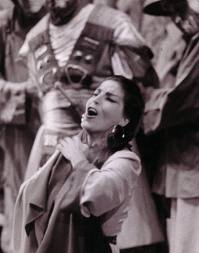
As a child during the 1940s, my father would sometimes find himself enjoying dinner, when all of a sudden, a live, in-the-flesh, world-class opera singer (the legendary Licia Albanese, for example) would burst into a famous aria — from right across the street.  Incredibly, it was always the actual diva, or tenor, or baritone who had just sung – or was scheduled to sing – at a performance at the San Francisco Opera.  Sometimes Verdi, other times Rossini or Puccini, the heartbreakingly beautiful notes would waft through the windows of my father’s house from across Franklin street, where his neighbors were having a party.  The Vanuccis just happened to be friends with Gaetano Merola, an Italian immigrant and the founder, director, and maestro of the SF Opera from 1923 to 1953.   And what better hostess gift than to bring along a couple stars of the show?
Albanese singing Turandot

(Licia Albanese as Madame Butterfly, singing Un Bel Dì)        http://www.youtube.com/watch?v=gZINNVrgXec

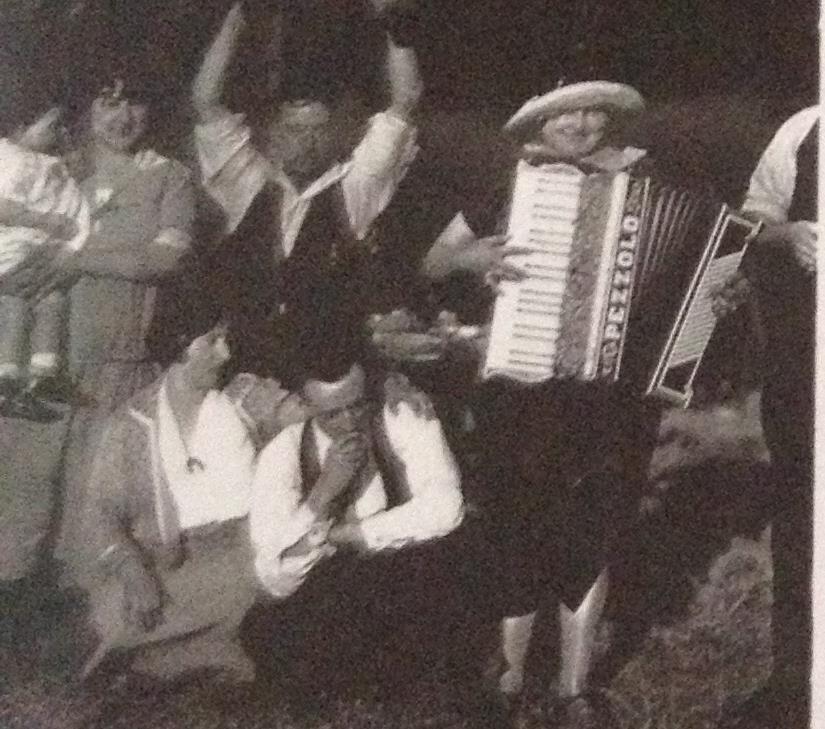
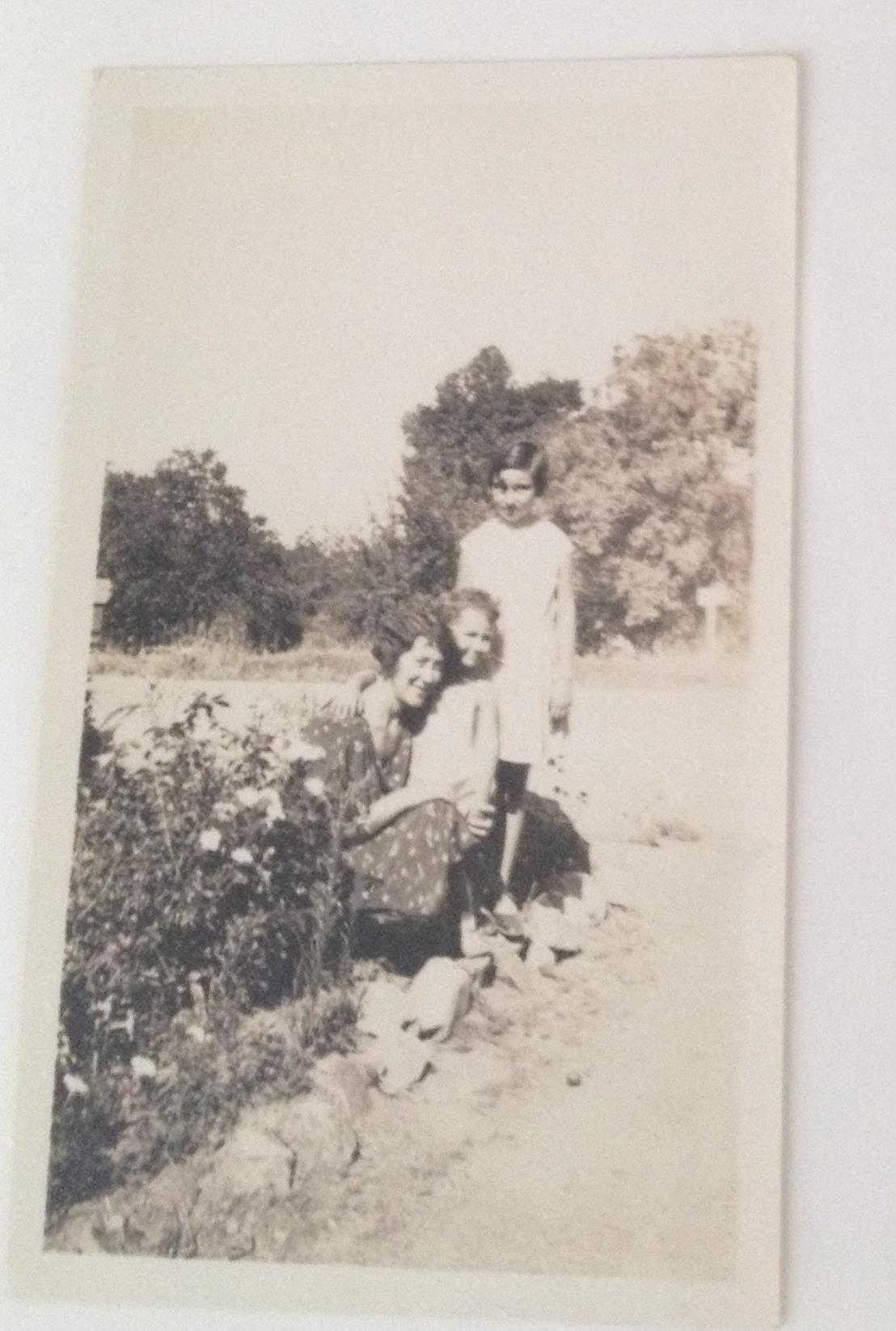
More live opera touched my father’s world while at the Amici Club summer picnics he and his family would attend on a farm in Mountain View, with other members of their Genovese community.  After a few games of bocce ball, walks in the cherry orchard, and salami tosses (once again, more on this in a future post!), the party would end up under a grove of trees which canopied a dance floor framed by picnic tables.  The band was blaring, the dance floor was full, the wine flowed.  Then at a certain point in the festivities, the music would stop as the crowd begged my grandmother to sing an aria or two.
Ant's iphone thru August 2013 427_crop

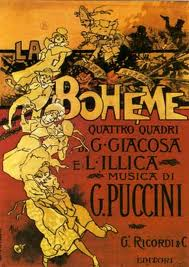
She apparently had the voice of a diva, and like most of her compatriots, was an opera fanatic; her favorite was Puccini’s La Bohème.  My father reminisces about how her glorious voice would thrill the crowd.

This accessibility and mainstream quality of live opera seems to be a trademark of the Italian-American communities of long ago.  While today, opera has a more exclusive feel (though opera companies do have some good deals to entice us ALL in the doors), it flowed more freely on the streets and in theaters where tickets did not have a high price tag.  For the Italian immigrants, opera seemed to be a necessary part of daily life, just like their pasta and wine – much like food for the spirit.  And no wonder, since it originated in Florence in the 16th century; it was in their genes.

Love of this art form touched every rung on the social ladder: poor fishermen could be heard singing and whistling favorite arias, as much as successful businessmen might hum a famous overture.  Perhaps opera’s broad appeal was, in part, due to its intense exploration of the human condition in its purest form.  (After all, where else but an opera house is one guaranteed a journey to the highest highs and the lowest lows that comprise the human experience?)

merola

(Gaetano Merola in action)

Richard Dillon, in his book North Beach: The Italian Heart of San Francisco describes the palpable excitement when a highly anticipated diva was in town to perform in 1884.  He writes that, “For days and weeks, all the Italians in town sang arias as they worked, whether they were button sellers or florists, teamsters or tough oystermen out on the bay” (113).  He also writes of the audience in later years participating in opera performances held in the once-famed Circolo Famigliare Pisanelli (The Pisanelli Family Circle).  The riled and excited crowd would whistle and hum spontaneously and enthusiastically with the orchestra (117).  My guess is that this scenario played itself out in other Little Italies in the country as well.  One could never know when a little Rossini might burst forth from the barber’s mouth during a trim, or when a crew of vegetable peddlers might channel Verdi or Leoncavallo.  And let’s not forget the arias and overtures blaring from radios or phonograph players through open windows.

Below are some links to a few well known arias and overtures by Italian composers. Play them while you cook, eat, play, or work; play them to your children, to your friends, to yourself. Play them whenever you want to feel a slice of Little Italy in your own backyard!  I bet you’ll find yourself singing or humming along in no time.

http://www.youtube.com/watch?v=c7O91GDWGPU    (Rossini’s William Tell Overture)

http://www.youtube.com/watch?v=8A3zetSuYRg           (Verdi’s La Donna è Mobile, from Rigoletto)

http://www.youtube.com/watch?v=GucXt7eaWRI       (Puccini’s Nessun Dorma, from Turandot)

http://www.youtube.com/watch?v=t0-1sQ0XOGE  (Puccini’s O Soave Fanciulla, from La Bohème)

Andiamo!  Find yourself an opera festival to attend using the links below:

http://www.operabase.com/festival.cgi?

lang=en&http://www.operainstyle.com/festivals.php

Che gioia!
Torrone’s Box

Standard

CHRISTMAS 2013 002_crop

“Go ahead,” he said with a thick Italian accent and a smile.  “Take it!”

I looked first at the small box he was waving in his hand, and then up at my mother, searching for her disapproval. Somewhat to my chagrin, she nodded with enthusiasm to indicate that yes,  I could take candy from a stranger — even this stranger with dark bushy eyebrows wearing a bloodied butcher’s apron.  At least he was still behind the counter.

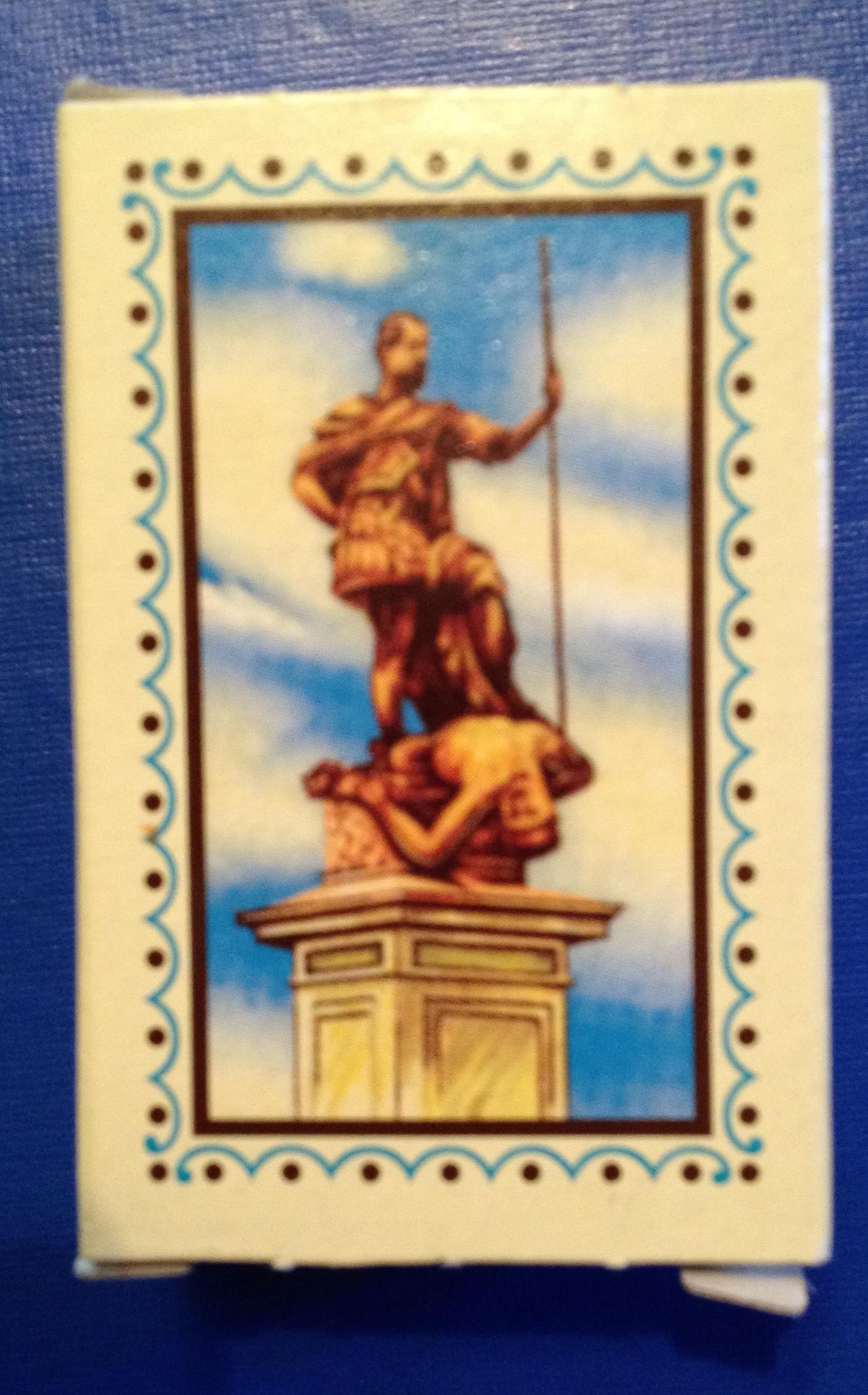
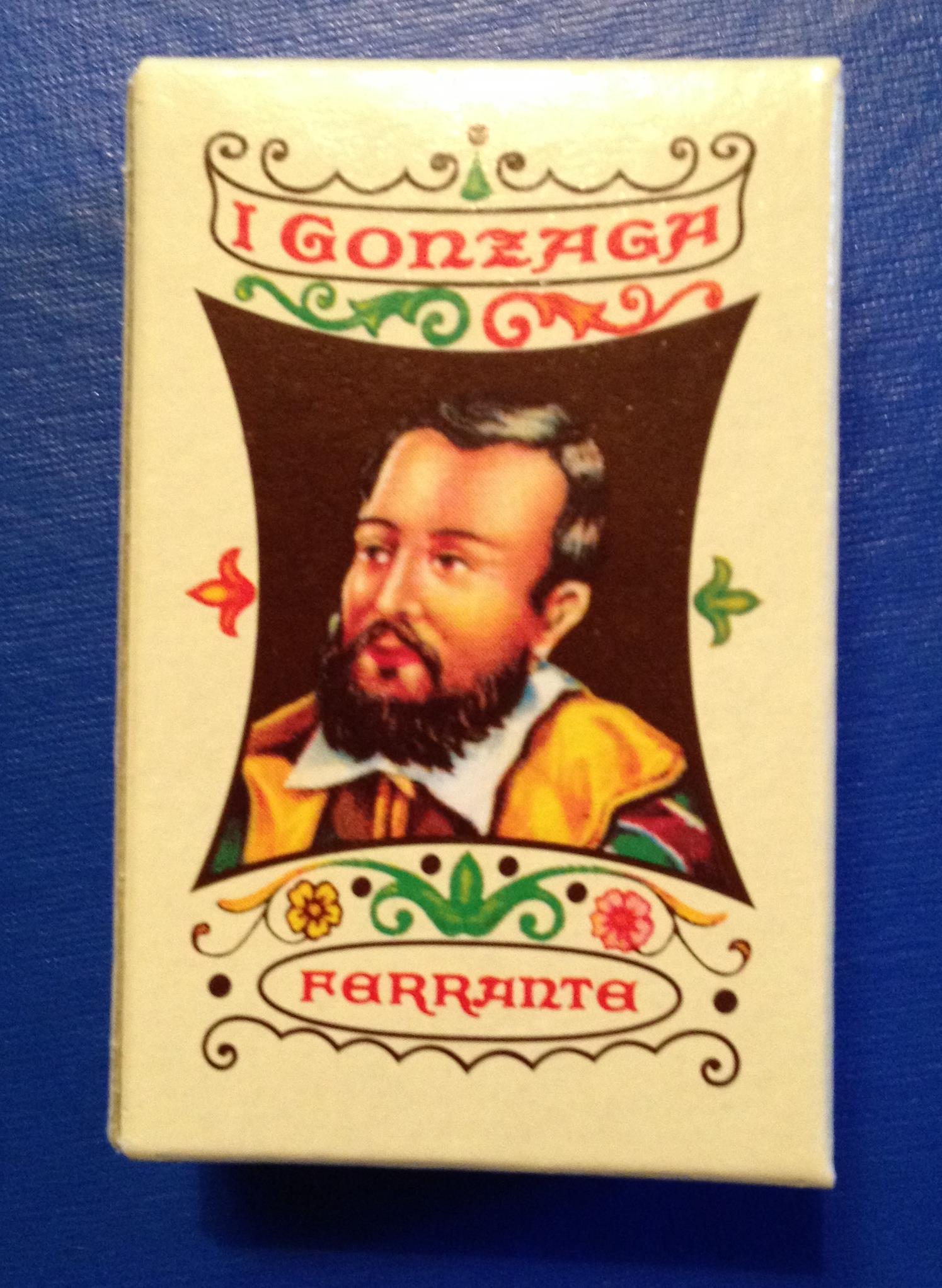
I put my palm out, and there he placed the dainty, pretty box — such an unbutcheresque item to be handing out to small children.  Then I looked more closely, and it started to make more sense: the name Ferrante Gonzaga was emblazoned above and below the portrait of a bearded man (who, at the time, I had thought was the butcher himself; turns out, Gonzaga was a mercenary captain during the Renaissance).  The flip side portrayed a statue of a triumphant Gonzaga gripping a spear while standing over his nemesis, Envy. CHRISTMAS 2013 003_crop Strange box.  Little swirls, flourishes, and embellishments in red, blue, and black, as well as the flavor — vaniglia written on the top flap, “vanilla,” on the bottom — contrasted with the military vibe of the pictures.  La Florentine Almond Nougat Candy, it said on one side; I would henceforth know it as torrone.

I paused as I had a Pandora moment: voices in my head said, “Don’t open it!” I half expected envy, crime, hate and disease to fly out in so doing.  But hope springs eternal, so I unfastened the flap and, well, hoped for the best.

I pulled out a little rectangle, neatly wrapped in soft, bendy foil, which contained an off-white, bland-looking smaller rectangle with nuts.  I looked at my mom and wanted to give it back — but in the end, took a bite.  And rather than the evils of the world springing forth, the box released a blissful dance for the senses in the form of torrone: sweet honey, crunchy nuts, chewy nougat, a whiff and the flavor of comforting vanilla.  It was a delicious treat — even if the box was a little ominous — and a treat that my brother and I would look forward to each time we returned to La Romanina delicatessen in Menlo Park and found Tony behind the counter.  He always made sure we left with our little box (as well as a slice of head cheese, but that’s another story for another day).

Many years between young adulthood and young motherhood passed before I would eat torrone again. When I open one today, new things fly out of the box: those joyous memories of trips to La Romanina and the Italian sandwich dinners that would result from such trips; visits to Lucca Deli on Chestnut Street in San Francisco’s Marina district, which was a few blocks away from my father’s childhood home.  All it takes is a quick search on the internet to find people gushing with stories and memories linking toronne  to holidays and family celebrations of long ago with Italian relatives.  This little box  has a power that transports.

Like everything else, torrone can be purchased online.  But I feel so fortunate to have found them in abundance in an Italian food and wine shop in Dallas – and fortunate to have found the shop in general.  Jimmy’s is a true microcosm of a Little Italy.   Product after glorious product pack the shelves: pastas, risotto, house made (and celebrated) sausage and meatballs, wine, pickled and marinated vegetables, San Marzano tomatoes, coffee, Baci chocolates, La Florentine and Ferrara torrone, and countless other Italian products.  To be surrounded solely by such products is food for the soul and adds an Italian flavor to the shopping experience.  The authentic ingredients allow you to concoct splendidly simple Italian dishes, while delicious  pre-made filled pastas, sausages, meatballs, and desserts can transport you to your own Little Italy the moment you return home.

In addition, Jimmy’s provides me – and numerous others! – with a space in which we can nostalgically return to time spent with Italian relatives, as we are surrounded by the products of those times, the flavors of our childhood.   What joy to find such a place in a town with no Little Italy to call its own.

Now my children are having their own childhood experience with Torrone: they love finding the 18-count La Florentine box in Jimmy’s tucked on the dark shelf near the register; they love choosing which flavor (lemon, orange, or vanilla) they will have that day; but most of all, they love tasting the pure sweet deliciousness.  How exciting that one of these days, they will taste the memories too.

Che gioia!

Little Italy Everywhere, Every Day

Standard

ANT'S IPHONE THRU AUGUST 2013 389_crop

I want to be in Little Italy right now.  Yes, any Little Italy will do: San Francisco’s North Beach, Boston’s North End, New York’s Mulberry Street.  I want to smell the bubbling marinara, the sautéing garlic, the baking pane dolce; I want to hear wine and prosecco corks popping and Italian waiters clamoring for you to join the festivities inside – or on the sidewalk; I want to see the red checkered tablecloths, the joyous faces, and an Italia soccer jacket or two, just as I did when I lived in North Beach prior to moving to Dallas six years ago.  I want to be part of that celebration of life so easily found in a Little Italy.

But I also want to be in Little Italy to dive into the past, to conjure those memories of holidays with my Italian-American family, from homemade cannelloni and prosciutto-wrapped melon, to childhood conversations with the family priest from Malta.  Surrounded by family and a strong Italian presence, we were there because my paternal grandparents had immigrated from northern Italy to San Francisco decades earlier.

There’s something supremely rich about the Italian-American experience and Little Italies in general, these enclaves of Italian culture created by immigrants trying to recreate what they had left behind.  From their butchers, bakers, and grocers, to their traditions and reverence for a meal and the family – and the family meal – the Italian immigrants left an indelible print in their neighborhoods evidenced in the spirit that remains.  Vestiges of their warm and engaging ghosts hang in the atmosphere, and the aura of celebration lives on. The vibrant flavor of a Little Italy  is a reminder of a world the immigrants seem to have literally packed in their bags and brought with them decades ago.

There’s something magical about a Little Italy that lures in the tourist as much as the local.  It is a combination of the food (athough that cannot be said for every restaurant in a Little Italy…) and wine – and perhaps more than anything, it is the ubiquity of that spirit of celebration, connection, community, and family that we all inherently yearn for.

So what’s to be done when no such magical Little Italy exists anywhere in my proximity?

Create it.

And CHE GIOIA I felt when I realized what was right in front of me. What joy to realize that the spirit of Little Italy is all around me, no matter where I am, if I choose to see it.  And that I can share and create it with my own little family at any given moment.

While this site is about indulging memory and honoring the past, it is also about celebrating the here and now, through exploring and creating.  There are so many wonderful blogs focusing on Italy, but I want to revel in what is closer to home – both in the country and literally in my home.  I can “live Italian” by  focusing on the Italian-American experience.

This is a site about exploring the actual, physical Little Italies AND creating a Little Italy of one’s own – both in the home and in cities without a traditional Little Italy. Revel in the here and now via the food, the traditions, the gardening, the music, the games, the legends, the language, the sense of community brought by Italians to America.  It’s about living deliberately by picking a fig from your own garden and noticing the celestial purple and white filaments before you bite into it — just like Nonno would have done. It’s about the heavenly smell of vibrant green basil in your wine barrel planter before you transform it into a delectable pesto dinner.  It’s about sitting down while you eat with your family and friends and connecting over a simple meal — or a game of bocce ball.  It’s about cultivating your own garden, both literally and figuratively.

It’s about bridging past to present, along a path of joy.

So as it turns out, it looks like I am in Little Italy right now — a virtual Little Italy that will become ever larger with each deliberate act of exploration, discovery, and creation.

Che gioia!