
Grissini: The Sticks that Launched A Thousand Stagecoaches

Standard

GRISSINI-TULIPS2_crop


Some are tall, thin and graceful; others possess an awkward beauty with charming imperfections. Their allure is undeniable, their appeal universal to those who know them.  People like my father are drawn to their big crunch, mild flavor, and towering elegance.  Sometimes relegated to tight neat, uniform bundles, their varying heights and widths and crooked bodies also mean they could be bunched askew in some wild bouquet.

They grace the tables of Italian restaurants from coast to coast – and yes, I’m talking about grissini.  That’s breadsticks in English.  And they are certainly more than just a stick of bread.  I’m not talking about the soft, squat, squishy versions.  I mean the hard, tall, thin, crunchy originals developed in 17th century northern Italy.

My father has been an ardent fan of the breadstick for a while, taking joy in the Cookie-Monsteresque chomp-fest replete with crumbs flying in all directions.  Sometimes he likes to punctuate sentences with a brief wave of a grissino; other times he just likes to munch in silence, focusing on the whole experience, from flavor, to crispy crunch, to sound.  He remembers eating them frequently when growing up; his mother would buy them at an Italian bakery or the corner grocery store (where the sticks still came from that Italian bakery) in San Francisco’s Marina district, with its highly concentrated Italian immigrant population.  The grissini were never the star of the meal, but they were an important player on the table several nights a week.

After visits with his sister years later, she would routinely send my father off with a tall, awkwardly beautiful bundle from Lucca Deli.  And now friends and family supply him with his breadstick fix when they can.
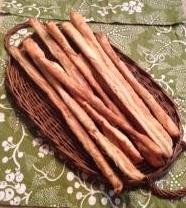
GRISSINIBASKET_crop

Turns out my father is not only in good company in his love of grissini, but that they have a royal history as well.  One story has it that they were created in the late 17th century in the northern Italian city of Torino by the court baker Antonio Brunero as a remedy for future King Vittorio Amedeo of Savoy’s digestive problems. Unable to digest even breadcrumbs without “issues,” the thin and crunchy sticks of bread went down without a hitch.  Grissini became quite popular throughout Italy due to their high digestibility compared to regular bread. It also helped that they would stay fresh for weeks.

Perhaps more remarkable is that grissini were also the Sticks That Launched a Thousand Stagecoach Trips: apparently Napoleon had his own obsession for breadsticks — so much so that he founded a stagecoach service in the 19th century between Torino and Paris primarily devoted to the delivery of his beloved grissini!

1810Napoleon[41]

(Wait – is that a grissino in his hand?)

What a contradiction in form and flavor: that dramatic baton, long and thin, sometimes jagged and bumpy, both elegant and rugged at once, with a massive crunch to be heard rooms away.  Yet what a mild flavor (those original plain ones, at least) belies their imposing figure.  Now cooks routinely jazz them up with seeds, herbs, cheeses, or wrap them in prosciutto.  They seem to have ascended in rank as a necessity on the Italian antipasti platter.

But for my father, plain is always best.  I whipped up some simple grissini the other day using a version of Carol Field’s recipe for Grissini Torinesi  (below) and then relayed the sticks to my father during our recent visit a few days later.  They were just as tasty — and even better, according to him — with their more substantial crunch brought on by age.  Definitely Napoleon-worthy in his book.


Recipe based on Grissini Torinesi from Carol Field’s book The Italian Baker

INGREDIENTS:

1 3/4 teaspoons active dry yeast

1 tablespoon malt syrup (if you don’t have any, the breadsticks come out fine)

1 1/4 cups warm water

2 tablespoons olive oil + more for brushing the dough

3 3/4 cups unbleached all-purpose flour

1 1/2 teaspoons kosher salt + more for sprinkling

1/2 cup semolina flour for sprinkling

INSTRUCTIONS:

Stir yeast and malt into warm water in the bowl of a stand mixer (may be done by hand too — read on!). Let stand until foamy, about 10 minutes. Mix in 2 tablespoons oil with paddle attachment. Add flour and salt and mix until dough comes together. Change to dough hook and knead at low speed about 3 minutes.  Finish kneading briefly by hand on a lightly floured surface. N.B.: you can mix dough by hand and knead by hand until dough is smooth, soft, velvety and elastic, 8 to 10 minutes.

Pat the dough with your hands into a 14- x 4-inch rectangle on a well-floured surface. Lightly brush top with oil. Cover with plastic wrap and let rise until doubled, about 1 hour.

Sprinkle dough with semolina flour before cutting and stretching (although it’s not a big problem if you don’t have semolina flour…). Cut dough crosswise into 4 equal sections, then cut each section into 8 strips about the width of a finger.  The dough is so elastic that you can simply pick up each piece and stretch it between your hands to fit the length of a baking sheet. Place the breadsticks on lightly oiled baking sheets or on a sheet of parchment paper.

Preheat the oven to 400°. Just before baking, spray the breadsticks lightly with water.  Sprinkle with kosher salt if desired. Bake the breadsticks until light brown and crisp, 20 to 25 minutes.


Little Italy in the Orto: The Italian Kitchen Garden Transplanted to America

Standard

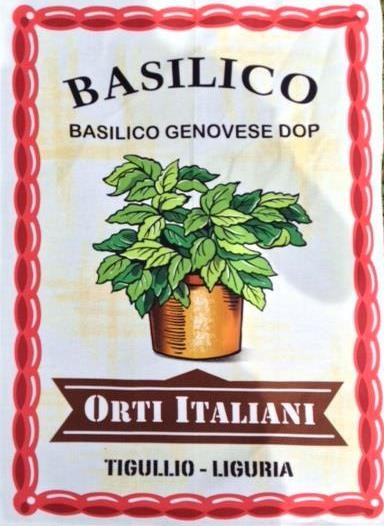
BASILICO TOWEL PIC FOR KGIOIA_crop

We stayed out of Umberto’s way – i.e. his vegetable garden – and he stayed away from our toys and swing set.  It was a mutual understanding.  We may have been mere preschoolers spending our afternoons at his home in the daycare his wife ran, but we knew never to pluck a strawberry or snap a zucchini vine for use as a jumprope.  It wasn’t clear what Umberto did when he wasn’t covered in dirt (or if he even spoke English), but we did know that this man lived for his garden and the food it produced.  The zucchini, lettuce, peppers, eggplant, and tomatoes were his babies to tend to, just as his wife Angie tended lovingly to us.

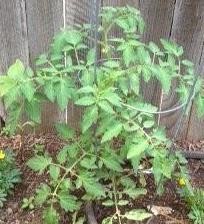
TOMATO_crop

Umberto and Angie had immigrated from northern Italy years earlier and had brought the established tradition of the orto — the Italian kitchen garden — with them to their new home, like many of the Italians who arrived in the late 19th and early 20th centuries had done before them.  Although growing one’s own vegetable garden has become more common today, the orto has long been a standard part of Italian life – for reasons both gustatory and economic.  Besides certainly serving as a haven from everyday worries, the Italian kitchen garden had a more concrete purpose for Umberto and his countrymen: it provided the simple ingredients for those fresh, vibrant recipes and flavors synonymous with Italian food.  By creating an orto in America, Umberto ensured he and his wife could continue to eat as they had when still in Italy.

But their garden was about more than satisfying their palates; it was a way for them to feel more at home in America.  To grow their own food and then taste those familiar flavors and meals helped them reconstruct the sense of home they had left behind.

When Italian immigrants poured into the US in the late 19th and early 20 centuries, they found themselves engulfed in an alien landscape, language, and world of flavors.  Eating Italian eventually would become possible, as immigrants opened Italian restaurants and planted ortos, and as Italian markets became thriving centers of the city, where those vegetables not grown in one’s orto could be purchased.

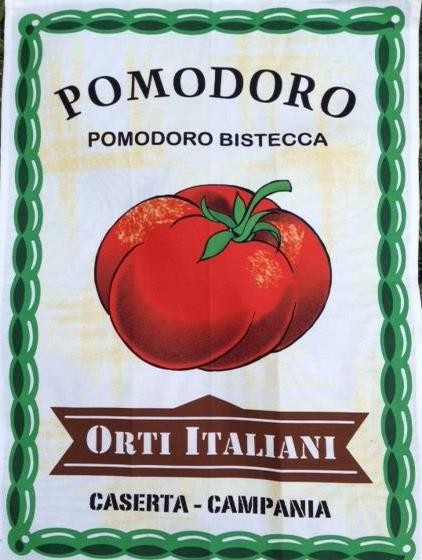
POMODORI TOWEL PIC FOR KGIOIA_crop

Some Italians took the orto a large step further and used their farming talents (many Italian immigrants had been farmers before they made their leap to the New World and brought seeds across the Atlantic) to become thriving participants in California’s agricultural industry.  The state’s mediterranean climate was just right for growing the Italian-farmed crops, which they would then sell in the larger produce markets.  According to Deanna Paoli Gumina in her The Italians of San Francisco, the Italians are credited with introducing San Franciscans to zucchini, broccoli, eggplant, Italian beans, bell peppers, parsley, garlic, rosemary, fennel, marjoram, oregano, and sweet basil.  With the Transcontinental Railroad transporting Californian produce across the country, the introduction of at least some of these vegetables and herbs must have included the populations of other cities as well. (Stay tuned for much more on this in a later post!)

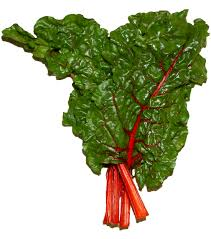
swiss chard

My father remembers his Italian mother tending to the family orto growing up in the 30s and 40s.  He recalls a plentiful yield of zucchini, lettuce, beans, and tomatoes, as the garden thrived under the care of her green thumb.  And years later, Grandpa Frank would spoil us with the treasures from his own prolific orto: he would bring armfuls of lettuce, beans, baby carrots, zucchini, parsley and Swiss chard nearly every time he saw us. He spent much time tending to his garden, while possibly also tending to the memory of his childhood orto. I wish I could ask him now if he planted and picked according to the moon’s cycle, as so many Italians still do.

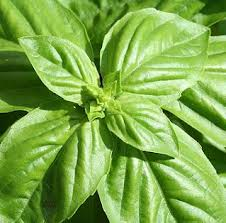
My family has a little orto of our own, connecting us to Italy, our relatives, and our ancestors.  I see Grandpa Frank in the red-veined, dark green leaves of the Swiss chard my eldest son proudly planted in the winter.  I imagine my grandmother Nina tending to her family’s garden when I see our zucchini and tomatoes inching their way to fruition.  And I imagine her excitement at the prospect of transforming that ripe zucchini into a torta.  I am reminded of my father’s fig tree when I see ours, and I can taste my mother’s pesto when I pass by our 16 basil plants preparing themselves for my sons to pluck their leaves and help me whip them into pesto all summer long for their appreciative father.  Even baby loves to get in on the action by licking the spatula.

basil

There is nothing like growing your own food to transport and connect – connect to the earth, yes, but also to a land and lifestyle across an ocean; to connect to people with you, far from you, or those long gone — even those you never knew.   And growing your own orto — even if it is just a pot of basil or one small parsley plant — can give you the sense that you are linked with all of the above, as well as the Italian immigrant lifestyle of growing and eating the foods of their homeland.  They replanted their own Little Italy in America, in order to restore and retain the vibrant and familiar flavors of both food and home that they had left behind.

Try spinning those ingredients from your own orto into one of these Italian recipes (or just run to the store already and pretend you grew them):

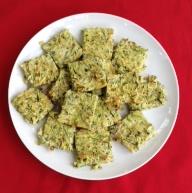
ZUCCHINI TORTA ~ (adapted from my grandmother’s recipe):

Sauté 1 small onion and 2 cloves of garlic in 3 tablespoons olive oil.  Set aside until cool.

In a bowl, mix 1/4 cup parsley, 4 eggs, 1/2 cup grated parmesan, 1/2 tsp herbes de provence, 1/2 tsp oregano, 1/2 tsp salt, 1/2 cup breadcrumbs, 4 large grated zucchini, and the cooled garlic and onions.

Pour into a greased pan (I use 11 3/4 x 7 1/2, but something around that size will do. 8 x 8 will require more cooking time).

Bake for 45 minutes, or until firm to the touch and lightly browned on top.

TORTA 1_crop

Zucchini Torta

PESTO ~ (inspired by a more elaborate recipe, without a couple of ingredients I don’t usually have lying around the house ~ but it still tastes amazing!)

Put in a blender or cuisinart (or if you are into being truly authentic, crush it all with your mortar and pestle) and whir together:

4 cups(-ish) basil leaves

2 cloves garlic

1/2 cup parsley (but if you don’t have any on hand, can be omitted)

1 tsp salt

1/2 cup olive oil

1/2 cup grated parmesan

~Enough pesto for a pound of pasta~


P.S. / FYI –  To grow your own veggies with a truly “authentic” Italian flavor, you can order up some seeds from the source at Seeds from Italy (www.growitalian.com).


Torrone’s Box

Standard

CHRISTMAS 2013 002_crop

“Go ahead,” he said with a thick Italian accent and a smile.  “Take it!”

I looked first at the small box he was waving in his hand, and then up at my mother, searching for her disapproval. Somewhat to my chagrin, she nodded with enthusiasm to indicate that yes,  I could take candy from a stranger — even this stranger with dark bushy eyebrows wearing a bloodied butcher’s apron.  At least he was still behind the counter.

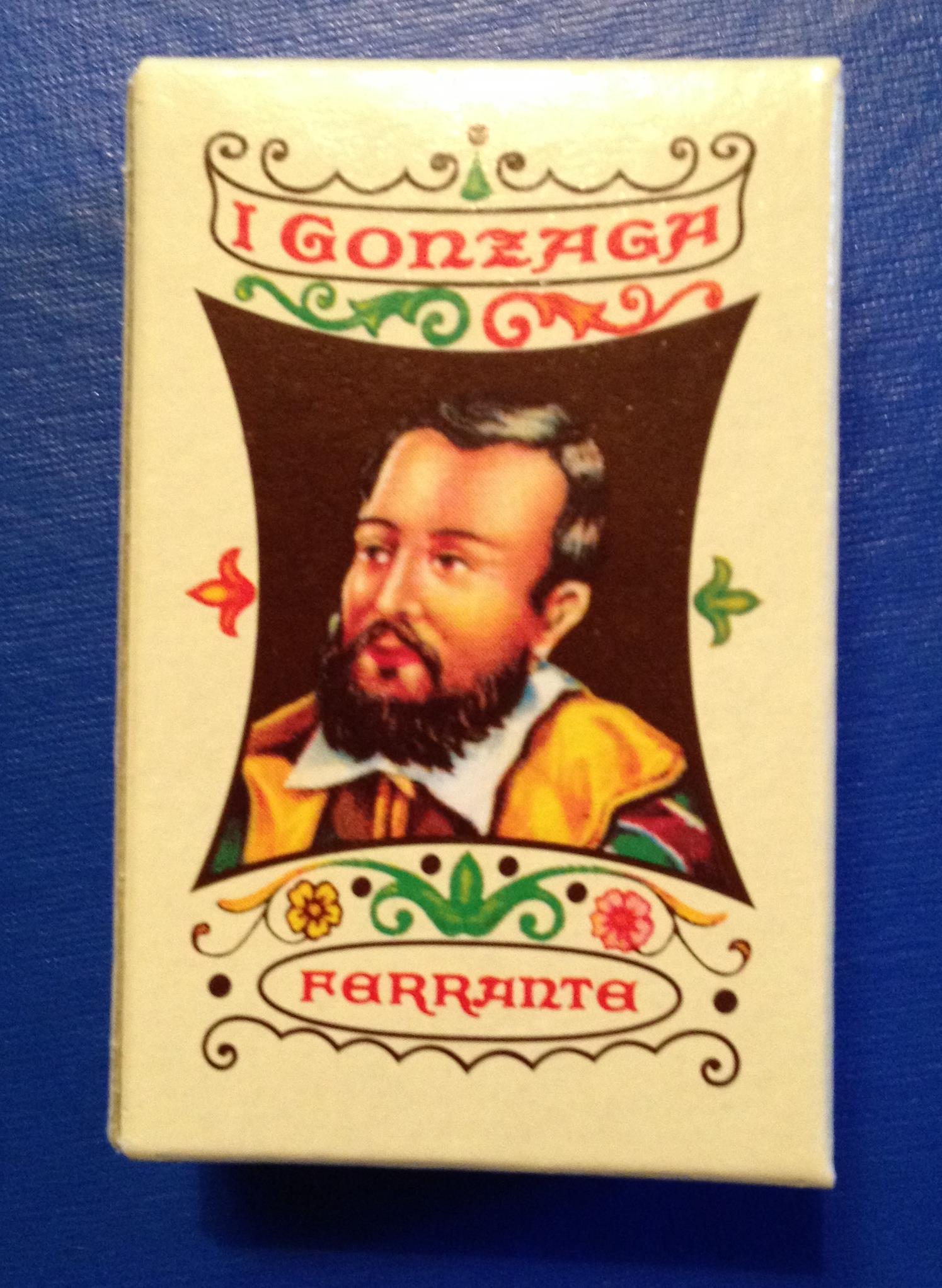
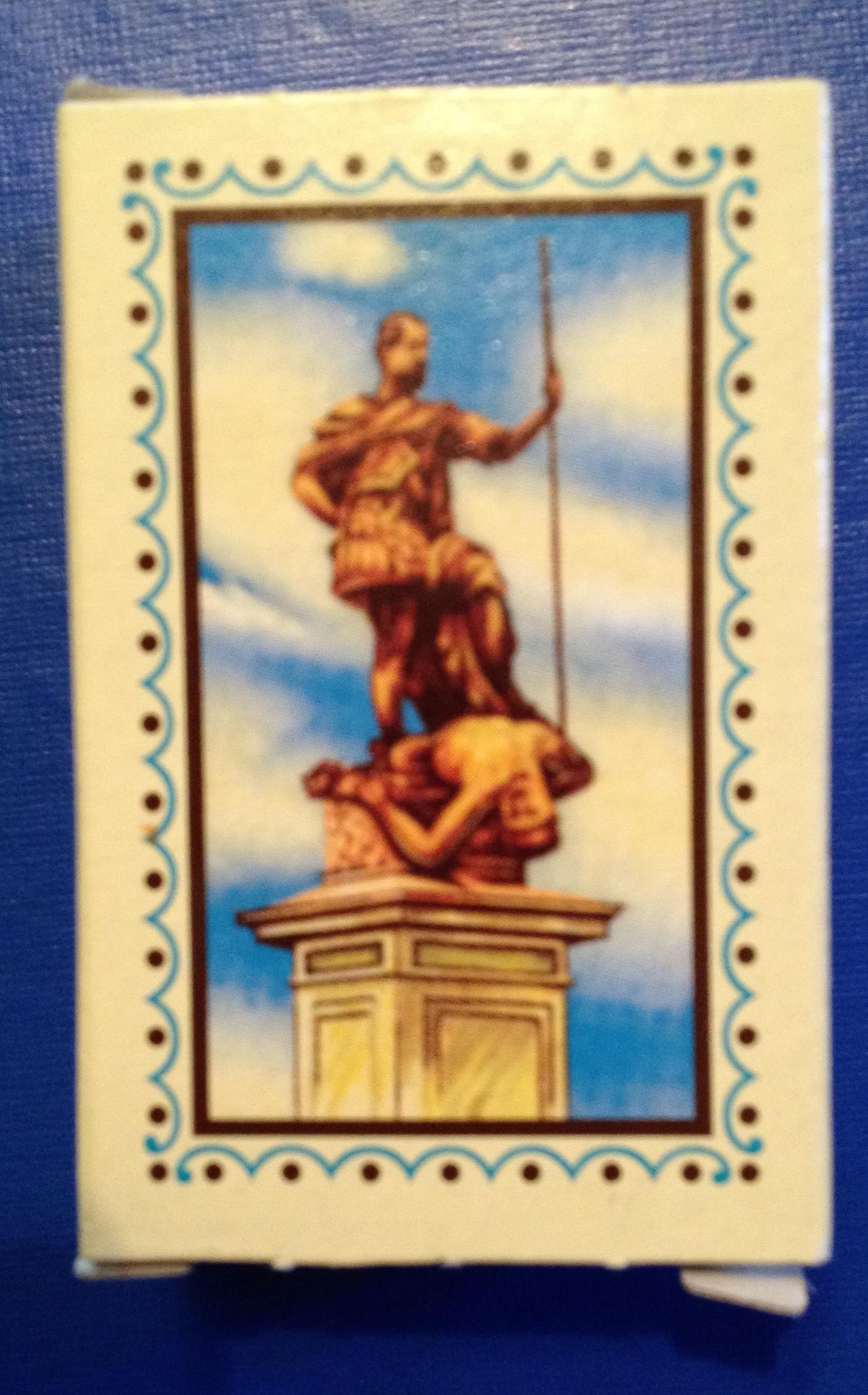
I put my palm out, and there he placed the dainty, pretty box — such an unbutcheresque item to be handing out to small children.  Then I looked more closely, and it started to make more sense: the name Ferrante Gonzaga was emblazoned above and below the portrait of a bearded man (who, at the time, I had thought was the butcher himself; turns out, Gonzaga was a mercenary captain during the Renaissance).  The flip side portrayed a statue of a triumphant Gonzaga gripping a spear while standing over his nemesis, Envy. CHRISTMAS 2013 003_crop Strange box.  Little swirls, flourishes, and embellishments in red, blue, and black, as well as the flavor — vaniglia written on the top flap, “vanilla,” on the bottom — contrasted with the military vibe of the pictures.  La Florentine Almond Nougat Candy, it said on one side; I would henceforth know it as torrone.

I paused as I had a Pandora moment: voices in my head said, “Don’t open it!” I half expected envy, crime, hate and disease to fly out in so doing.  But hope springs eternal, so I unfastened the flap and, well, hoped for the best.

I pulled out a little rectangle, neatly wrapped in soft, bendy foil, which contained an off-white, bland-looking smaller rectangle with nuts.  I looked at my mom and wanted to give it back — but in the end, took a bite.  And rather than the evils of the world springing forth, the box released a blissful dance for the senses in the form of torrone: sweet honey, crunchy nuts, chewy nougat, a whiff and the flavor of comforting vanilla.  It was a delicious treat — even if the box was a little ominous — and a treat that my brother and I would look forward to each time we returned to La Romanina delicatessen in Menlo Park and found Tony behind the counter.  He always made sure we left with our little box (as well as a slice of head cheese, but that’s another story for another day).

Many years between young adulthood and young motherhood passed before I would eat torrone again. When I open one today, new things fly out of the box: those joyous memories of trips to La Romanina and the Italian sandwich dinners that would result from such trips; visits to Lucca Deli on Chestnut Street in San Francisco’s Marina district, which was a few blocks away from my father’s childhood home.  All it takes is a quick search on the internet to find people gushing with stories and memories linking toronne  to holidays and family celebrations of long ago with Italian relatives.  This little box  has a power that transports.

Like everything else, torrone can be purchased online.  But I feel so fortunate to have found them in abundance in an Italian food and wine shop in Dallas – and fortunate to have found the shop in general.  Jimmy’s is a true microcosm of a Little Italy.   Product after glorious product pack the shelves: pastas, risotto, house made (and celebrated) sausage and meatballs, wine, pickled and marinated vegetables, San Marzano tomatoes, coffee, Baci chocolates, La Florentine and Ferrara torrone, and countless other Italian products.  To be surrounded solely by such products is food for the soul and adds an Italian flavor to the shopping experience.  The authentic ingredients allow you to concoct splendidly simple Italian dishes, while delicious  pre-made filled pastas, sausages, meatballs, and desserts can transport you to your own Little Italy the moment you return home.

In addition, Jimmy’s provides me – and numerous others! – with a space in which we can nostalgically return to time spent with Italian relatives, as we are surrounded by the products of those times, the flavors of our childhood.   What joy to find such a place in a town with no Little Italy to call its own.

Now my children are having their own childhood experience with Torrone: they love finding the 18-count La Florentine box in Jimmy’s tucked on the dark shelf near the register; they love choosing which flavor (lemon, orange, or vanilla) they will have that day; but most of all, they love tasting the pure sweet deliciousness.  How exciting that one of these days, they will taste the memories too.

Che gioia!

Little Italy Everywhere, Every Day

Standard

ANT'S IPHONE THRU AUGUST 2013 389_crop

I want to be in Little Italy right now.  Yes, any Little Italy will do: San Francisco’s North Beach, Boston’s North End, New York’s Mulberry Street.  I want to smell the bubbling marinara, the sautéing garlic, the baking pane dolce; I want to hear wine and prosecco corks popping and Italian waiters clamoring for you to join the festivities inside – or on the sidewalk; I want to see the red checkered tablecloths, the joyous faces, and an Italia soccer jacket or two, just as I did when I lived in North Beach prior to moving to Dallas six years ago.  I want to be part of that celebration of life so easily found in a Little Italy.

But I also want to be in Little Italy to dive into the past, to conjure those memories of holidays with my Italian-American family, from homemade cannelloni and prosciutto-wrapped melon, to childhood conversations with the family priest from Malta.  Surrounded by family and a strong Italian presence, we were there because my paternal grandparents had immigrated from northern Italy to San Francisco decades earlier.

There’s something supremely rich about the Italian-American experience and Little Italies in general, these enclaves of Italian culture created by immigrants trying to recreate what they had left behind.  From their butchers, bakers, and grocers, to their traditions and reverence for a meal and the family – and the family meal – the Italian immigrants left an indelible print in their neighborhoods evidenced in the spirit that remains.  Vestiges of their warm and engaging ghosts hang in the atmosphere, and the aura of celebration lives on. The vibrant flavor of a Little Italy  is a reminder of a world the immigrants seem to have literally packed in their bags and brought with them decades ago.

There’s something magical about a Little Italy that lures in the tourist as much as the local.  It is a combination of the food (athough that cannot be said for every restaurant in a Little Italy…) and wine – and perhaps more than anything, it is the ubiquity of that spirit of celebration, connection, community, and family that we all inherently yearn for.

So what’s to be done when no such magical Little Italy exists anywhere in my proximity?

Create it.

And CHE GIOIA I felt when I realized what was right in front of me. What joy to realize that the spirit of Little Italy is all around me, no matter where I am, if I choose to see it.  And that I can share and create it with my own little family at any given moment.

While this site is about indulging memory and honoring the past, it is also about celebrating the here and now, through exploring and creating.  There are so many wonderful blogs focusing on Italy, but I want to revel in what is closer to home – both in the country and literally in my home.  I can “live Italian” by  focusing on the Italian-American experience.

This is a site about exploring the actual, physical Little Italies AND creating a Little Italy of one’s own – both in the home and in cities without a traditional Little Italy. Revel in the here and now via the food, the traditions, the gardening, the music, the games, the legends, the language, the sense of community brought by Italians to America.  It’s about living deliberately by picking a fig from your own garden and noticing the celestial purple and white filaments before you bite into it — just like Nonno would have done. It’s about the heavenly smell of vibrant green basil in your wine barrel planter before you transform it into a delectable pesto dinner.  It’s about sitting down while you eat with your family and friends and connecting over a simple meal — or a game of bocce ball.  It’s about cultivating your own garden, both literally and figuratively.

It’s about bridging past to present, along a path of joy.

So as it turns out, it looks like I am in Little Italy right now — a virtual Little Italy that will become ever larger with each deliberate act of exploration, discovery, and creation.

Che gioia!